 Your browser is out of date. For best experience switch to latest updated Browser.
 Get Chrome
 Get Edge
 Get Firefox
Ability Levels
Categories
Resource Types
Age/Grade Range
CCSS
Anchor Standard
Speaking & Listening
Language
Reading
Audio clip: Hearing only low pitch sounds
$ 150
Simulation from original 1960s record: low pitch hearing loss.
Guide to Self-Advocacy Skill Development - Suggestions for Sequence of Skill Attainment
$ 0
Age-anchored list of expected self-advocacy skills by grade. Starts with preschool with full attainment of self-advocacy skills by the end of grade 4.
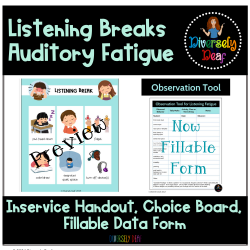
Listening Breaks & Auditory Fatigue
$ 7
Ways this product can be usedInservice HandoutClassroom PosterStudent Choice BoardDiscussion starter with DHH kidsData collection tool Printable and FILLABLEThe visuals representing listener break cho
...
oices are useful for students with hearing differences who need a listening break but are not self-aware or unable to manage the fatigue before it impacts their education.The observation tool is used by staff to collect data and identify factors similar to the process of an FBA. Is there a pattern? Is it occasional, frequent, or chronic? What precedes the fatigue? Hungry? Good night sleep? If listener fatigue is a possibility discuss your findings with the Teacher of the deaf.
Building Self-Confidence & Resilience to Maximize Acceptance of Hearing Devices (book)
$ 14
A significant proportion of students with hearing loss refuse to use hearing technology necessary for their educational access, often because they feel as though they do not fit in to their peer group
...
. The purpose of this book is to raise awareness for the reasons why hearing device rejection happens and specific instruction to occur at different ages to build student resilience and self-‐confidence, thereby increasing the likelihood that they will not reject using their hearing technology. Specific teaching activities and recommendations for instructional materials to develop identified skills have been included in this Guide.
Article: Permanent Damage from Longstanding Hearing Loss Due to Middle Ear Infection
$ 0
Article summary: Sound deprivation in adult mice causes irreversible damage to the inner ear. The findings suggest that chronic conductive hearing loss, such as that caused by recurrent ear infections
...
, leads to permanent hearing impairment if it remains untreated.
Key Points for Administrators and School Staff
$ 195
This resource discusses key point for administrators and school staff regarding the educational needs of students with hearing loss in regard to the realities of hearing device use and what educators
...
can do, including extra knowledge and skills, daily classroom needs, and social interaction issues. Separate handouts for teachers of students in early elementary and those in upper elementary and secondary grades. The information also includes evidence-based decision-making for access accommodations for students with hearing loss which focuses on the requirements of Title II of the ADA and the school's responsibility to identify appropriate communication access accommodations for every situation encountered in school. Worksheet to be used for team discussion of access needs is included.
Learning with Hearing Loss - Things for the Teacher to Know and Understand
$ 0
Handout describes the impact of hearing loss on student learning and accommodations that teachers can use to improve student outcomes.
Fluctuating - Relationship of Hearing Loss to Listening and Learning
$ 0
Handout with information on possible impact on understanding language, speECH-, social, and need for educational accommodations and services. For 16-25dB or minimal hearing loss.
Unilateral - Relationship of Hearing Loss to Listening and Learning
$ 0
Handout with information on possible impact on understanding language, speECH-, social, and need for educational accommodations and services. For unilateral hearing loss.
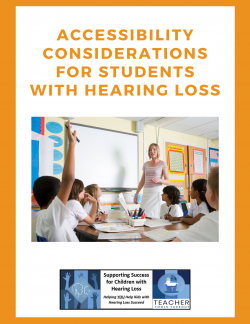
Accessibility Considerations for Students with Hearing Loss
$ 0
Communication access is a key component of 504, IDEA and Title II of the ADA. Under Title II of the ADA, schools are required to ensure that communication access is as effective for children with hear
...
ing loss as it is for their typically hearing peers through the provision of appropriate auxiliary aids and services. This handout provides examples of auxiliary aids and services that can make aurally delivered information available to students with hearing disabilities so that they can receive information from, and convey information to, others as effectively as students without disabilities.

 Cookies