 Your browser is out of date. For best experience switch to latest updated Browser.
 Get Chrome
 Get Edge
 Get Firefox
Ability Levels
Categories
Resource Types
Age/Grade Range
CCSS
Anchor Standard
Speaking & Listening
Language
Reading
Social - Strategies for Interaction
$ 195
Instructional strategies and helpful sheets to teach students how to deal with different aspects of social interaction. Includes fillable activity sheets for following a conversation, cooperation, co
...
nflict, competition, and accommodation.

CAVE Checklist - Communication Access in Virtual Education (Fillable)
$ 2
The CAVE Checklist (Fillable Version) is a self-report checklist is intended to be completed students age 9 and above who are deaf or hard of hearing to identify possible communication access issues t
...
hat may occur during virtual education situations. It is recommended that the CAVE be completed in an interview format with the DHH specialist discussing each situation with the student. Students read 10 questions related to accessing communication in online learning situations and rate them from Always Easy to Always Difficult, or Doesn't Happen. A total score can be obtained. Not every situation will apply to every student. Situations indicating appropriate access will receive scores of 4 or 5. Items scoring 1, 2, 3, need to be addressed for appropriate access needs. The 10 questions are followed by a list in which the student identifies what he or she thinks helps most during online learning.
Making and Staying in Conversations
$ 195
Techniques for keeping all students connected in the diverse classroom. Activities include: picture task cards for young students to describe; situation task cards for older students to practice resp
...
onses; practice clear communications by describing designs for others to draw; communication repair task cards
The Spirit of Giving
$ 195
This article provides activities to help students recognize that giving to others can be as worthwhile (or more so)as receiving. Worksheets include: "My Gifts" cut and paste for young students; The
...
Giving Board Game with situation game cards that move the player forward for generous acts; "My Giving Checklist" for students to record generous acts; gift certificates to be used as needed; a review of The Giving Tree by Shel Silverstein, suggesting that giving can actually go too far.
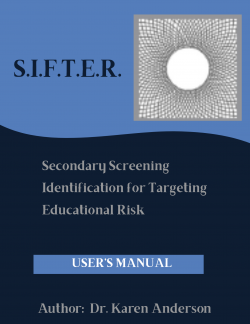
SIFTER - Secondary Screening Identification for Targeting Educational Risk - User's Manual
$ 0
The Screening Instrument For Targeting Educational Risk (SIFTER) was created as a tool to screen the functional performance of students with hearing loss in preschool in preschool, elementary and seco
...
ndary school and includes a scoring grid to identify areas of concern. This User Manual focuses on secondary students and will explain the background, development, validity, effectiveness and reliability of the SIFTER.
Social - Appropriately Responding to Others
$ 195
Includes fillable materials for teaching perspective of others; opinions; empathy, and importance of reading non verbal language. Reading and comprehension questions for basic to more advanced reader
...
s.

SIFTER - Elementary Screening Identification for Targeting Educational Risk - User's Manual
$ 0
The Screening Instrument For Targeting Educational Risk (SIFTER) was created as a tool to screen the functional performance of students with hearing loss in preschool in preschool, elementary and seco
...
ndary school and includes a scoring grid to identify areas of concern. This User Manual will explain the background, development, validity, effectiveness and reliability of the SIFTER.

Preschool S.I.F.T.E.R. - Screening Instrument For Targeting Educational Risk
$ 0
The Preschool Screening Instrument For Targeting Educational Risk (SIFTER) was created as a tool to screen the functional performance of students with hearing loss in preschool through kindergarten (a
...
ges 3-6). It includes a scoring grid to identify areas of concern. User's manual is at S0XASM1285.
School Communication Styles - Does this Sound Like You?
$ 175
Presents 3 communication styles: aggressive, passive, and assertive. Provides a means to discuss why advocacy is important in the context of appropriate interaction and peer expectations.
"The Sky's The Limit"
$ 299
A collection of comic strips revealing troublesome situations for teens with hearing loss. Includes commentary on how each humorous situation might be resolved.
...

 Cookies