 Your browser is out of date. For best experience switch to latest updated Browser.
 Get Chrome
 Get Edge
 Get Firefox
Ability Levels
Categories
Resource Types
Age/Grade Range
CCSS
Anchor Standard
Speaking & Listening
Language
Reading
Age 12-19 - Reconciling Feelings of Fitting In - Building Self-Confidence & Resilience
$ 250
For ages 12-19 years: This information addresses feelings of fitting in, problem-solving, social isolation, identity, importance of role models, positive outlook, and dealing with challenges due to he
...
aring loss. The purpose of this book is to raise awareness for the reasons why hearing device rejection happens and specific instruction to occur at different ages to build student resilience and self-confidence, thereby increasing the likelihood that they will not reject using their hearing technology. Specific teaching activities and recommendations for instructional materials to develop identified skills have been included in this Guide.
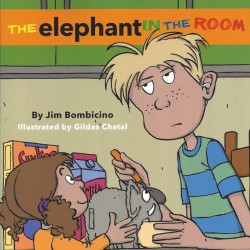
Elephant in the Room (iBook)
$ 6
Skyler has a hearing loss. And he doesn’t feel much like talking today. No wonder—he keeps missing what his parents and siblings have to say, and it’s frustrating. Skyler’s little sister, Maizy, tags
...
y, tags along on his morning routine and, with the help of her special friend, we learn that it takes more than hearing aids to help Skyler feel like talking again.This 35-page full color children’s book by Audiologist Jim Bombicino provides avenues for discussion and building vocabulary by highlighting the difficulties that students may face each day, including mishearing and misunderstanding information, the effect of background noise, and consequential frustration and confusion that can happen when the ease of daily communication is taken for granted by typically hearing persons. In this case, the story follows a young boy as he awakens and prepares for a typical school day.The e-book version includes audio of the text read by actors, while their voices are filtered to imitate how Skyler hears through his hearing aids! Listening situations include a speaker with added background noise, simultaneous speakers, a speaker talking too quickly, and mishearing words—all heard as they come through Skyler’s hearing devices. Perfect for helping teachers, families, and classmates understand what a hearing loss might be like. Finally put typically hearing adults and children in the shoes of the child with hearing loss!Please note: Compatible only with iPad and iOS devices. Free Author’s notes and discussion guide are available for download at Teacher Tools Takeout marketplace.How to Open ePub Files on Your iPad.Before trying to load the ePUB file make sure you have downloaded and installed iBook app from Apple’s app store.Directly on the iPAD or Iphone (recommended)1. Make sure the free iBooks app is on your iPad.2. Follow the link from Safari to reach the ePub document. This means either accessing your email to find the attached file, or going to our website to download the file with an access code.3. Select “Open in iBooks” on the iPad/iPhone4. The eBook will open and be added to your iBooks collection.5. From now on, you can open the ePub document from the iBooks app on your iPad/iPhone.From PC to iPAD1. Make sure the free iBooks app is on your iPad.2. Make sure the free Itunes app is on your PC. Open iTunes.3. Find the ePub file on your computer by accessing email or visiting website where purchased/obtained.4. Drag and drop the ePub file onto your Library in iTunes on your computer.5. Connect your iPad to your computer.6. Check under the “Books” tab in iTunes to be sure this ePub is selected for syncing7. Then sync.8. The ePub document is added to your iBooks collection inside the iBooks app.9. From now on, you can open the ePub document from the iBooks app on your iPad.Directly on PCHow to read Open EPUB or Open PDF e-books on a computer1. Download the free Adobe Digital Editions: https://www.adobe.com/solutions/ebook/digital-editions/download.html2. Open Adobe Digital Editions (ADE) on your Windows or Mac computer.3. Go to File > Add to Library.4. Find the saved EPUB or PDF file on your computer. By default, files are saved to your computer’s “Downloads” folder.5. Double-click an e-book to start reading, or follow these steps to transfer it to an e-reader.
Auditory Language & Learning Guide (ALLG)
$ 10
The Auditory Language & Learning Guide is an EXCELLENT informal evaluation tool for listening and language that can be used with students of any age and language ability. The 2 page checklist format e
...
asily allows the teacher to develop IEP goals based on identified student weaknesses in the 4 areas of audition/listening, receptive language, expressive language, and social communication. Skills can be rated as 'targeted', 'emerging', 'mastered' or 'previously assessed' and checked off by date achieved. This assessment tool can be used from year to year allowing instructors and parents to see growth in a students language and learning.
All Day Every Day - My Hearing Aid Story Template
$ 1
My Hearing Aid Book is a Word document designed for families or early intervention providers to insert photos of the child waking up, getting hearing aids put on, eating breakfast, etc. A good experie
...
nce story book to build language and good hearing aid wear practices.
Listening Skills - Parallels of receptive & expressive language
$ 0
Explains the parallels of receptive and expressive language as they occur in language development. Vocabulary, early verbal expressions; semantic relationships, morphological endings, syntax, memory a
...
nd sequencing.
Resources for Identifying DHH Student Needs: Eligibility Assessment and Beyond
$ 0
This resource is a list of functional and formal assessments to evaluate students with hearing loss in expanded core areas beyond language and academics. Links to find the sources are included. Tests
...
for preschool and school-age students are clearly identified.
The Insidious Effects of Classroom Acoustics on Student Performance
$ 0
Informational handout describes the realities of classroom acoustics and the impact on student learning, teaching and strategies to address acoustics issues.
Preparation for the IEP Meeting
$ 0
This is information for parents to consider as they develop the IEP. From www.agbell.org.
Differentiating Hearing Loss from Other Disabilities - Assessment Information - BUNDLE
$ 6
Differentiating Hearing Loss from Other Disabilities - Assessment Information is a bundle that includes 9 articles addressing how a hearing difference may be differentiated from other delays such as l
...
earning disabilities, ADD/ADHD; language and vocabulary delays; and/or intellectual disability. Other articles focus on why instruction from a TOD is necessary, legal implications, and ways to improve awareness of DHH services. 17 pages. Addresses needs on all ability levels. Includes IDs S0XASM0765-0773.
Visual Analogies Representing Impact of Reverberation on Speech and Noise
$ 0
This handout shows 3 popular analogies showing the impact of understanding written sentences in the presence of reverberation and noise and presents speECH- understanding in terms of puzzle pieces. C
...
an also be used as teaching tools to increase student understanding of reverberation and noise effects.

 Cookies