 Your browser is out of date. For best experience switch to latest updated Browser.
 Get Chrome
 Get Edge
 Get Firefox
Ability Levels
Categories
Resource Types
Age/Grade Range
CCSS
Anchor Standard
Speaking & Listening
Language
Reading
"The Sky's The Limit"
$ 299
A collection of comic strips revealing troublesome situations for teens with hearing loss. Includes commentary on how each humorous situation might be resolved.
...
Child Role Pay Measure - Social Communication in Challenging Situations
$ 3
Functional assessment via role play scenarios RE: peer group entry, response to provocation, response to failure, response to success, social expectations, teacher expectations. Provides scorable resp
...
onse key. For Grades 2, 3, 4, ages 7-10. Fillable version at P01ASM0575.
Beyond the Sky’s Limit -PPT
$ 3
NOTE: Powerpoint Presentation for viewing on PCA collection of comic strips revealing troublesome situations for teens with hearing loss. Includes commentary on how each humorous situation might be re
...
resolved.20 more situations and scenarios that mix humor with compassion in negotiating social communication.More antics and advocacy for teens and tweens with hearing loss.
Article: Exploring the Effects of Communication Intervention for Developing Pragmatic Language Impairments
$ 0
Study aimed to identify the type and intensity of intervention to result in improvement in communication behavior for pragmatic language.
Social - Tone of Voice
$ 295
Explains interpretation of communication is based more on tone of voice than vocabulary. Includes instructional strategies and 4 worksheets.
The Pragmatics Checklist - Social Communication Skills (fillable)
$ 395
Fillable version of checklist to screen for pragmatic language issues ages 2-7. By age 4 years, 43 of 45 items are typically communicated using complex language. Many children with hearing loss are 3
...
years delayed and continue to use 1-3 words rather than full sentences. Includes interpretation and intervention information.
Social Skills Checklist - Secondary (fillable)
$ 350
Teacher Checklist to rate a secondary student's conversational skills, problem solving, understanding emotions, compliments, flexibility. Fillable.
Social - Appropriately Responding to Others
$ 195
Includes fillable materials for teaching perspective of others; opinions; empathy, and importance of reading non verbal language. Reading and comprehension questions for basic to more advanced reader
...
s.
School Communication Styles - Does this Sound Like You?
$ 175
Presents 3 communication styles: aggressive, passive, and assertive. Provides a means to discuss why advocacy is important in the context of appropriate interaction and peer expectations.
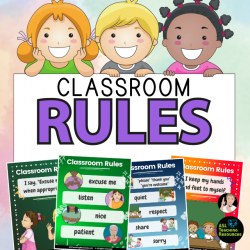
Class Rules and Expectations Posters ASL
$ 695
These vibrant and inclusive Class Rules and Expectations Posters with Sign Language are the perfect addition to your teaching toolkit to create a welcoming and harmonious learning environment for all.
...
Every child’s unique learning style is valued in our classrooms, and inclusivity is at the heart of everything we do. These 10 eye-catching posters have colorful backgrounds, delightful illustrations, and written expectations. But that’s not all! We’ve gone the extra mile by incorporating Sign Language signs, making it easier for our little ones to communicate effectively and fostering a sense of unity.Rules and Expectations Word WallThe Classroom Word Wall Posters are here to enrich vocabulary and comprehension. Each poster features words and engaging illustrations, enhancing memory retention and making learning an exciting adventure. Additionally, we’ve included Word and Signs posters, encouraging active participation, and reinforcing the connection between signs and their meanings. By acquiring these expressions, students can engage effectively with their peers and lay the groundwork for a lifetime of courtesy and empathy.Sign Language and Classroom ManagementImagine the joy on your student’s faces as they discover the power of Sign Language. By using these signs, children build essential communication skills and develop empathy and respect for others. The benefits extend beyond language development; they can even assist with classroom management by providing an alternative way to convey important messages without disruption.

 Cookies