 Your browser is out of date. For best experience switch to latest updated Browser.
 Get Chrome
 Get Edge
 Get Firefox
Ability Levels
Categories
Resource Types
Age/Grade Range
CCSS
Anchor Standard
Speaking & Listening
Language
Reading

CAVE Checklist - Communication Access in Virtual Education (French) - fillable
$ 0
The CAVE Checklist in French is a self-report checklist is intended to be completed students age 9 and above who are deaf or hard of hearing to identify possible communication access issues that may o
...
ccur during virtual education situations. It is recommended that the CAVE be completed in an interview format with the DHH specialist discussing each situation with the student. Students read 10 questions related to accessing communication in online learning situations and rate them from Always Easy to Always Difficult, or Doesn't Happen. A total score can be obtained. Not every situation will apply to every student. Situations indicating appropriate access will receive scores of 4 or 5. Items scoring 1, 2, 3, need to be addressed for appropriate access needs. The 10 questions are followed by a list in which the student identifies what he or she thinks helps most during online learning.
Addressing Self-Esteem and Issues of Fitting In
$ 0
Information handout on the importance of self-esteem to school success, PS-ychosocial development, and strategies to help feelings of fitting in to the mainstream classroom.
Elephant in the Room Discussion Guide
$ 0
This
discussion guide is meant to accompany the book with prompts for each page.
...
Why do so Many Students that Function with Mild Hearing Loss have Challenges Fitting In?
$ 0
Information handout on the special challenges students with mild hearing loss have in trying to "pass as normal" to fit in to classrooms.
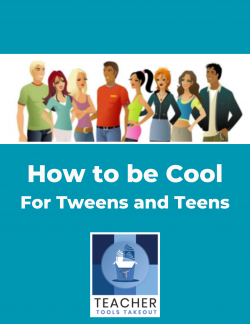
How to be Cool
$ 2
Excellent discussion handout to share with tweens and teens. Based on a study of a group of teens charged with creating a list of what makes individuals 'cool' and more acceptable to peers. Provides i
...
mportant insights about individuality and standing up for who you are and what you believe in.
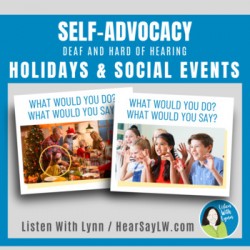
Self-Advocacy Mini Lessons Year Round Holidays and Social Events
$ 7
Ten Self-Advocacy Mini-Lessons with Year-Round Scenarios Featuring Social Events and Settings For Kids That Are Deaf and Hard of Hearing.Each scenario is made up of 3 parts:➼ Part One Real photos illu
...
otos illustrating a challenging listening situation at a celebration, gathering, or holiday event.➼ Part Two Guided questions, talking points, and discussion prompts.➼ Part Three Each scenario has a paired Try This! section with advocacy strategies to guide further learning.★ Digital No-Prep or PlanningEasily used by parents at home, teachers, and therapists both face-to-face and on tele-platforms. When playing on a computer, open and use a PDF reader such as the free Adobe Acrobat Reader DC. It can be opened and played with your favorite PDF reader app on a tablet or on an iPad.◈ ◈ ◈ ◈ ◈ ◈ ◈ ◈ ◈ ◈ ◈ ◈ ◈ ◈ ◈ ◈ ◈ ◈ ◈ ◈ ◈ ◈ ◈ ◈ ◈ ◈ ◈ ◈ ◈ ◈ CUSTOMER TIPS➼ Questions? EMAIL ME before purchasing this resource or anytime later♥ Sign-up HERE for the Listen With Lynn Emails♥ Let’s ConnectInstagramFacebookKeep up your good work. I am blessed to help along the way.Thanks so much!Lynn Wood
Article: Are You Deaf or Hard of Hearing? Perceptions of Identity in Families of Students with Hearing Loss
$ 0
Article reporting results of a study analyzing the self-identities of students with hearing loss and the perceptions of family members. Findings support identity as a fluid concept.
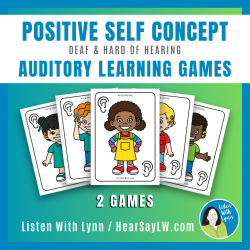
Positive Self-Concept Auditory Learning Games
$ 5
If you have kids who are deaf and hard of hearing that need a boost building their CONFIDENCE and SELF-CONCEPT then this resource is a must-have! It helps children feel good about themselves and their
...
hearing technology! The two games also target auditory memory, comprehension, descriptive vocabulary, questioning skills, grammar, and social skills.Colorful playing cards feature 16 children wearing hearing devices like hearing aids, cochlear implants, and bone-anchored hearing systems. It highlights vocabulary like unilateral, bilateral, behind-the-ear, in-the-ear, earmolds, processor, headpiece, magnet, coil, microphone, and more.
Talking and learning about hearing devices prepares kids with resilience and builds appropriate advocacy skills from an early age.
These auditory learning games are FUN for the kids and are a SIMPLE one-time prep GRAB & GO activity for you.
INCLUDES:✧ H-EARS TO YOU - Game 1
Uses differential yes or no questions to listen and isolate a "hidden" game card of a child who is deaf or hard of hearing. (Print version and a Digital version ready to screen share)✧ HEAR! HEAR! - Game 2
Players ask questions and listen to match pairs of children
with hearing loss. (Print)✧ A guide with instructions and potential listening and language outcomes. ✧ Listening and spoken language (LSL) Tips◈ ◈ ◈ ◈ ◈ ◈ ◈ ◈ ◈ ◈ ◈ ◈ ◈ ◈ ◈ ◈ ◈ ◈ ◈ ◈ ◈ ◈ ◈ ◈ ◈ ◈ ◈ ◈ ◈ ◈
CUSTOMER TIPS ➼ Questions? EMAIL ME before purchasing this resource or anytime later ➼ Earn TPT Credit towards your future purchases by leaving a review for this resource.
➼ Follow me to be updated with newbies and freebies! ♥ Sign-up HERE for the Listen With Lynn Emails
♥ Let’s Connect on Instagram and Facebook
Keep up your good work. I am blessed to help along the way.
Thanks so much!
Lynn Wood
Auditory Rehab - Auditory Training BATTLESHIP Game
$ 6
Play Battleship the classic board game with an auditory spin using this Auditory Rehab Game Changer™. This activity is designed for individuals that are deaf and hard of hearing and for use in cochlea
...
cochlear implant rehabilitation for older children, teens, and adults.IDEAL FOR: Deaf & Hard of Hearing, Listening & Spoken Language, Auditory Training, Auditory Rehabilitation, Speech...The BATTLESHIP Game Changer✤ is played with special directions and rules✤ challenges beginner and intermediate listeners✤ works in closed and bridge listening sets✤ practices identifying words in sets and within connected speech✤ focuses on taking turns, talking while advocating for hearing needs✤ encourages gameplay and practice at home with family and friends✤ practice can lead to communication success✤ is motivating and funGameChangers™➼ result in natural listening practice much different than contrived lists or online or programs.➼ allow for real-time modifications based on the player's auditory skills➼ fosters self-advocacy skills➼ improves communication confidence and successINCLUDES:a pre-game companion that prepares the Listener to play the gamefeatures practice exercises and activities.offers clear directions for therapists, teachers, a listening coach, family members, and friendsincludes listening tips and strategiesfollows an auditory hierarchyNOTE: The amount of practice necessary will vary before a listener is ready to play the game and is dependent upon the listener’s listening skills.
Living in the World with Hearing Loss: What Other People May Think
$ 1
Living in the World with Hearing Loss: What Other People May Think consists of 3 activity worksheets wherein students consider their own feelings about having a hearing loss in contrast to the accepta
...
nce of others who do not have a hearing loss. An excercise to use when students resist amplification use and to support self-determination.

 Cookies