 Your browser is out of date. For best experience switch to latest updated Browser.
 Get Chrome
 Get Edge
 Get Firefox
Ability Levels
Categories
Resource Types
Age/Grade Range
CCSS
Anchor Standard
Speaking & Listening
Language
Reading
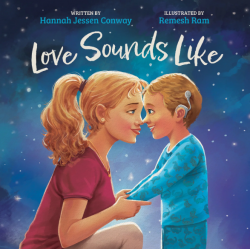
Love Sounds Like (Activity Pack)
$ 0
Love Sounds Like is a rhyming read-aloud that features a heartfelt conversation between a hearing mother and her deaf son about how love is much more than a sound – you can see, smell, taste, and touc
...
ouch it, too! In the free, accompanying activity pack, little readers can go on their own journey of the senses by writing or drawing how they experience love through the five senses. The activity pack also includes discussion questions, opportunity to practice a few simple signs, and the American Sign Language alphabet.
Article: Speech Perception in Noise by Children with Cochlear Impants
$ 0
This article shares the speECH- perception results of 3 grouPS- of kindergartners, one of which used cochlear implants. It confirmed poor speECH- recognition for children with CIs which is likely to i
...
mpact development of language and phonological awareness. 2013.
Hearing Tech - Cochlear Implant Batteries
$ 2
Describes parts of the cochlear external device, with explanations about battery types, changes, and troubleshooting.
The Secondary School Survey and Discussion
$ 295
This survey is appropriate for tweens and teens, especially those who are B to resist using hearing aids. It asks questions about how students feel about their hearing loss, hearing devices, and commu
...
nication with hearing loss. Once the student completes the survey their responses can be compared with a large group of students with hearing loss. Provides discussion questions.
AAC Devices and Personal DM Systems
$ 2
AAC devices were initially intended for individuals with adequate access to spoken language but a limited ability to express themselves. Now AAC devices are used for children with a full spectrum of c
...
ommunication abilities, including those who have hearing loss and/or severe receptive language delays. This handout provides information describing how different AAC devices can be integrated with a student's DM/FM device so that auditory access can be achieved.
Which Assistive Devices Will be Useful to Me - Advocacy in Action
$ 1
Worksheet in which students list a) Devices I will use in the future, b) Devices I may use in the future, c) Devices I will not use. To be used after discussion of different types of assistive devices
...
.
My FM-DM-HAT System Advocacy in Action
$ 1
Worksheet for students to draw their Hearing Assistance Technology (HAT) system and name the parts.
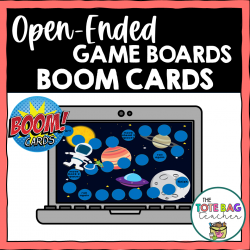
Open-Ended Game Boards for Boom Learning
$ 3
oard games are a great way to work on IEP goals with my students, but as an itinerant teacher, I needed something that would work for a wide variety of students and be flexible enough to use with any
...
skill.These open-ended game boards for Boom Cards are perfect for play-based therapy and work well for any skill set your students are working on. This Boom Cards deck features 9 different themed game boards so you can mix things up and keep your students engaged the whole year long! These digital game boards would be great on a laptop, desktop, Chromebook, tablet, or any other mobile device that can access the internet. They can even be used on your SmartBoard. Plus, they’re no prep which means no printing, laminating, or storage.How to use:1. Select a game board.2. Select a different game piece for each player. Each board includes 6 moveable game pieces.3. Use either a die or spinner (not included) and move that number of spaces. Follow arrows or text directions on the game board to keep things interesting.4. Between turns, practice whatever skill you're working on with your student. It could be sight words, auditory processing skills, speech sounds, math facts, etc.What's included:A pdf with a link to access these Boom Cards on the Boom Learning website.Themes: under the sea, spring, dinosaurs, summer, jungle, fall, hot air balloons, space, and winterPlease note a digital spinner is not included in this product.More about BOOM Learning…To use Boom Cards, you must be connected to the Internet. Boom Cards play on modern browsers (Chrome, Safari, Firefox, and Edge). Apps are available for Android, iPads, iPhones, and Kindle Fires. For security and privacy, adults must have a Boom Learning account to use and assign Boom Cards. You will be able to assign the Boom Cards you are buying with "Fast Pins," (play provides instant feedback for self-grading Boom Cards). Fast Play is always a free way for students to engage with Boom Cards decks. For additional assignment options, you'll need a premium account. If you are new to Boom Learning, you will be offered a free trial of our premium account. Read here for details: http://bit.ly/BoomTrial.
Attitude is Caught, Not Taught for Families
$ 0
This is a powerful handout Attitude is Caught, Not Taught which sheds light on how parent behavior helps shape child attitudes toward hearing aid use and hearing loss.
Hearing Tech - Dangers of Integrating Personal and Classroom Technologies
$ 2
Explains the use of classroom audio distribution systems and the possible interference imposed on signal to the students' assistive technology such as hearing aids and FM/DM systems. See BUNDLE at S0X
...
HT798.

 Cookies